Are Bengal cats good for people with allergies? It’s one of the most common questions asked by cat lovers who sneeze, itch, or struggle with pet related allergies but still dream of owning a feline companion.
For many allergy sufferers, especially adults aged 18–35, finding a cat that fits an active lifestyle and causes fewer allergic reactions feels like the perfect solution.
This growing interest has pushed breeds labeled as “hypoallergenic” into the spotlight, with Bengal cats often topping the list.
Known for their sleek coats, minimal shedding, and exotic appearance, Bengals are frequently discussed as a possible option for sensitive owners.
Table of Contents
But is a bengal cat for allergies really a safe choice, or just another popular myth? Understanding how Bengal cats affect allergies is the first step toward making an informed, allergy friendly decision.
Are Bengal Cats Good for Allergies?
The short answer is: Bengal cats are not hypoallergenic, but some people with mild allergies may tolerate them better than other breeds. This distinction is extremely important.
No cat breed is completely allergy free. However, certain breeds including Bengals have physical and behavioral traits that may reduce the amount of allergens released into the environment. This is why so many allergy sufferers search specifically for a Bengal cat for allergies.
Understanding why Bengals get this reputation requires first understanding what actually causes cat allergies.
What Causes Cat Allergies?
Contrary to popular belief, cat allergies are not caused by cat fur itself. The real trigger is a protein called Fel d 1.
The Fel d 1 Protein Explained
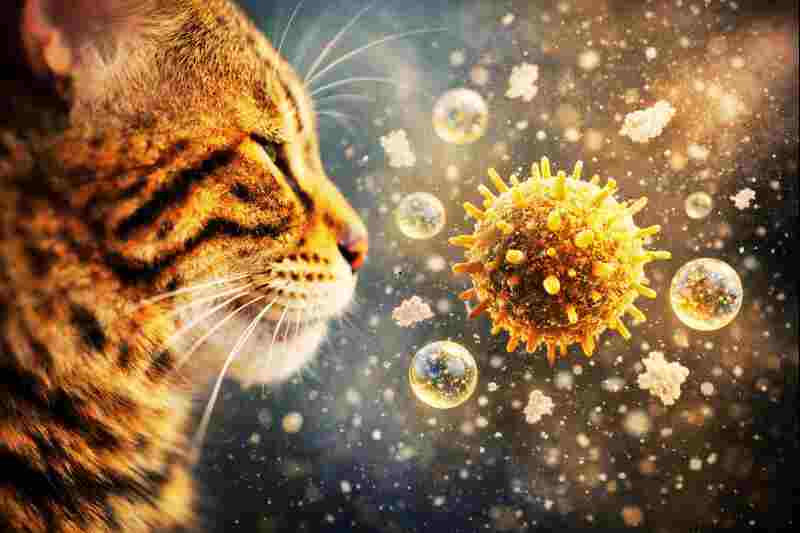
Fel d 1 is a microscopic protein produced mainly in a cat’s saliva, skin oils, and dander. When cats groom themselves, this protein spreads across their fur. As the fur sheds or dander becomes airborne, humans inhale or come into contact with Fel d 1, triggering allergic reactions.
Common allergy symptoms include:
- Sneezing and runny nose
- Itchy or watery eyes
- Skin rashes or hives
- Coughing or wheezing
Because Fel d 1 sticks easily to furniture, clothing, and carpets, it can build up quickly inside homes.
Why Fur Length Doesn’t Matter
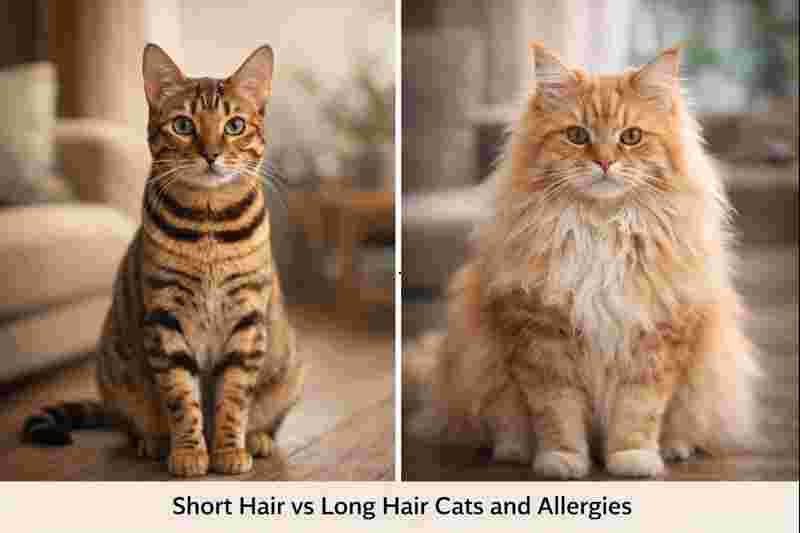
Many people assume short haired cats are automatically better for allergies. While coat length can influence shedding, all cats produce Fel d 1, regardless of hair length. This is why even hairless breeds like the Sphynx can still trigger allergies.
So where does the Bengal cat fit into this?
Why Bengal Cats Are Often Considered Allergy Friendly
Bengal cats have several traits that may reduce allergen spread compared to other breeds. These traits don’t eliminate allergens, but they can make a difference for some people.
Short, Sleek Coat With Minimal Shedding
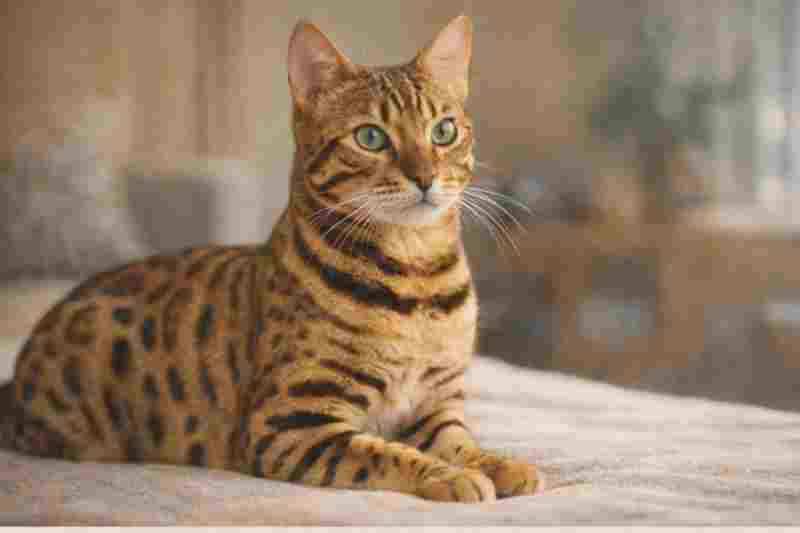
Bengal cats have a single layer coat that is short, dense, and silky. Unlike fluffy or double coated breeds, Bengals tend to shed less throughout the year. Less shedding means fewer allergen covered hairs floating around your home
Lower Dander Buildup
Because their coat lies flat against the body, Bengal cats often accumulate less loose dander. This can result in fewer airborne allergens, especially when combined with regular grooming.
Fastidious Grooming Habits
Bengals are naturally clean cats. Their grooming habits help prevent excessive oil and dander buildup on the skin. While grooming spreads Fel d 1, it also reduces loose particles when paired with proper brushing.
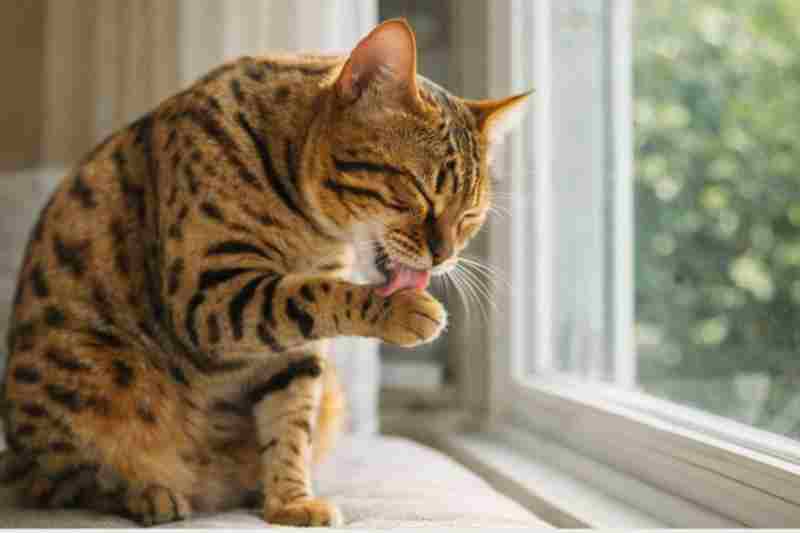
These factors together explain why many allergy sufferers report fewer symptoms around Bengal cats but results vary greatly from person to person.
Bengal Cats vs Other Breeds for Allergy Sufferers
If you’re comparing breeds, understanding how Bengals stack up can help clarify expectations.
Bengal Cat vs Domestic Shorthair
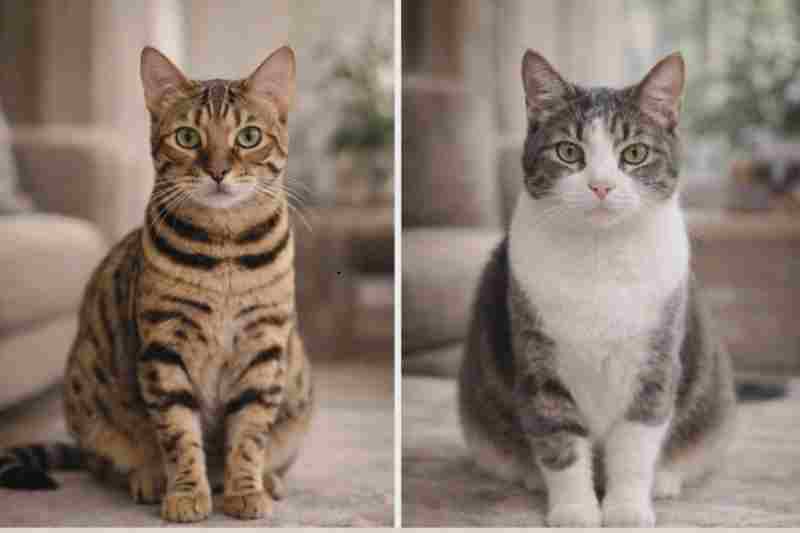
Domestic shorthairs vary widely in coat type and grooming habits. Some shed heavily, while others don’t. Bengals are more predictable due to their standardized coat and lower shedding tendency, which may benefit allergy sensitive owners.
Bengal Cat vs Siamese
Siamese cats also have short coats and are sometimes recommended for allergies. However, Siamese cats tend to be more vocal and emotionally demanding.
Bengals, while energetic, are often preferred for their lower shedding and athletic build.
Bengal Cat vs Sphynx
Sphynx cats lack fur, but they still produce Fel d 1 through their skin oils. In fact, they often require frequent bathing to reduce allergen buildup. Bengals typically require less maintenance while still offering potential allergy advantages.
Can You Live Comfortably With a Bengal Cat If You Have Allergies?
For many people, the answer depends on allergy severity.
Mild Allergies

If your symptoms are mild such as occasional sneezing or itchy eyes you may be able to live comfortably with a Bengal cat, especially with proper home management.
Moderate to Severe Allergies
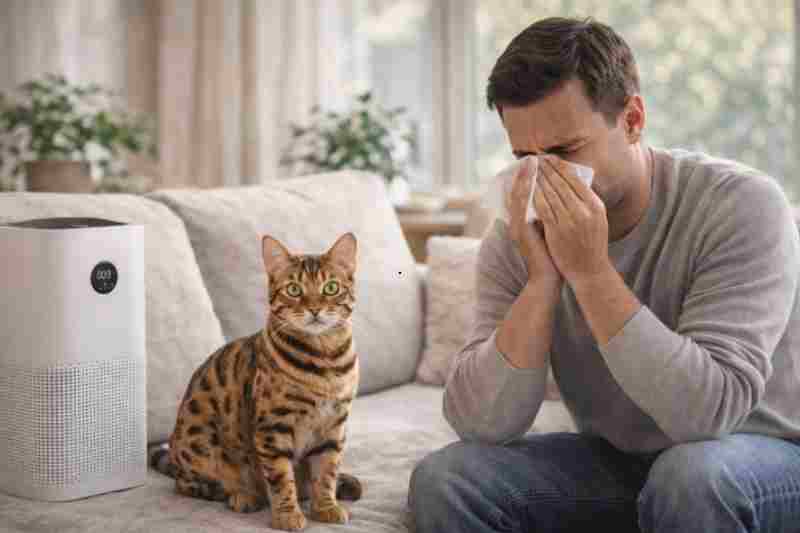
If you experience asthma attacks, severe congestion, or skin reactions, a Bengal cat may still trigger symptoms. In these cases, no breed is a guaranteed solution, and medical guidance is strongly recommended.
Always Test Before Adoption

Spending time with a Bengal cat before adoption is crucial. Visit breeders, rescues, or friends with Bengals and monitor your reaction over several hours. This real world exposure is far more reliable than online claims.
Tips to Reduce Allergies When Owning a Bengal Cat
If you decide a Bengal cat is right for you, these strategies can significantly reduce allergens in your home.
Grooming and Bathing Routine
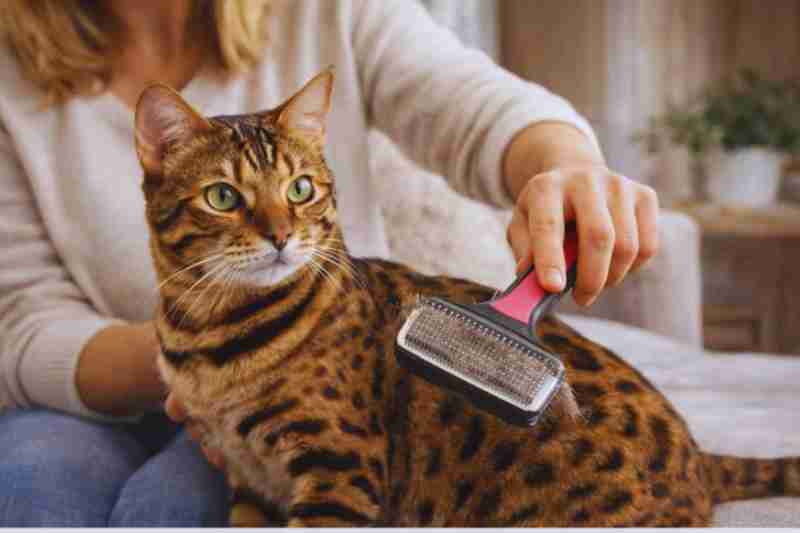
- Brush your Bengal 1–2 times per week
- Use gentle grooming tools designed for short coats
- Occasional bathing (once every 4–6 weeks) can reduce allergen buildup
Home Cleaning and Air Quality
- Use a vacuum with a HEPA filter
- Wash bedding and cat blankets weekly
- Invest in an air purifier for bedrooms and living areas
Create Allergy Free Zones
Keeping your bedroom cat free can dramatically improve sleep quality and reduce overnight exposure to allergens.
Personal Allergy Management
- Wash hands after handling your cat
- Avoid touching your face
- Change clothes after extended play sessions
These habits can make living with a Bengal cat far more comfortable.
Pros and Cons of Choosing a Bengal Cat for Allergies
Pros

- Lower shedding than many breeds
- Sleek coat with reduced dander
- Intelligent, playful, and engaging personality
- Often tolerated better by people with mild allergies
Cons

- Not truly hypoallergenic
- Allergy reactions vary by individual
- High energy level requires daily interaction
- Can be vocal and demanding
Honest consideration of both sides builds trust and leads to better adoption decisions.
Who Should Consider a Bengal Cat for Allergies?
Bengal cats are best suited for:
- Young adults with active lifestyles
- Apartment dwellers who can commit to daily play
- People with mild cat allergies
- Owners willing to maintain grooming and cleaning routines
Who Should Avoid a Bengal Cat
- Individuals with severe cat allergies or asthma
- People seeking a low energy or lap only cat
- Owners unwilling to manage allergens proactively
Conclusion
A Bengal cat for allergies can be a reasonable option for some but it is not a miracle solution. Bengals are not hypoallergenic, yet their short coat, lower shedding, and grooming habits may reduce allergen exposure for people with mild sensitivities.
The key to success lies in realistic expectations, proper allergy management, and responsible adoption. Always test your reaction before committing, and be prepared to adjust your environment to support both your health and your cat’s well being.
When approached thoughtfully, a Bengal cat can be a loving, energetic companion even for some allergy sufferers.
Read More about bengal cat