
Bengal cats are known for their striking leopard like appearance, high intelligence, and energetic personalities.
But owning a Bengal is about more than just looks it’s about understanding their strong social needs. Bengal cat socialization plays a crucial role in shaping how friendly, confident, and adaptable your cat becomes.
Table of Contents
Whether you’re raising a Bengal kitten or adopting an adult Bengal, proper socialization can prevent behavior issues and help your cat thrive in a modern American household. This guide covers everything you need to know, step by step.
What Is Bengal Cat Socialization and Why It Matters
Bengal cat socialization is the process of helping your cat feel comfortable with people, animals, sounds, and everyday environments. It teaches your Bengal how to interact safely and confidently with the world around them.
In the USA, many Bengal cats live indoors or in busy households. Without socialization, Bengals may develop fear based behaviors such as aggression, excessive vocalization, or destructive habits. Proper socialization helps them become
- Friendly with adults and children
- Confident in new environments
- Calm around visitors
- Comfortable with handling and grooming
A well socialized Bengal is happier, healthier, and easier to live with.
Understanding the Social Nature of Bengal Cats
Bengal cats are more social than many traditional domestic breeds. Their ancestry includes Asian leopard cats, which contributes to their intelligence, alertness, and curiosity.
Unlike laid back breeds, Bengals crave interaction. They often
- Follow their owners from room to room
- Initiate play
- Learn tricks and routines quickly
- Become bored if left alone too long
This means Bengal cat socialization is not optional it’s essential. Bengals that lack stimulation or interaction may act out through scratching, climbing, or loud vocalizing.
Best Age to Start Bengal Cat Socialization
Socializing Bengal Kittens (2–12 Weeks)
The ideal time to begin Bengal cat socialization is between 2 and 12 weeks of age. During this period, kittens are naturally open to new experiences.
- Gentle handling by different people
- Household sounds (TV, vacuum, doorbells)
- New textures, toys, and rooms
Positive experiences during this window lead to confident adult cats.
Socializing Adult Bengal Cats
Adult Bengals can absolutely be socialized it just takes more patience. Rescue Bengals or rehomed adults may have past experiences that affect trust.
For adult Bengal cat socialization:
- Move slowly
- Let the cat approach you
- Use food and play as motivation
- Avoid forcing interaction
Consistency is key, and progress often comes faster than expected.
How to Socialize a Bengal Cat With Humans
Build Trust First
Sit at your Bengal’s level and let them come to you. Avoid direct staring, which can feel threatening.
Use Interactive Play
Wand toys, feather teasers, and laser pointers help bond without physical pressure. Play mimics hunting and builds confidence.
Positive Reinforcement
Reward calm behavior with treats, praise, or extra playtime. Bengals respond extremely well to rewards.
Create Daily Routines
Consistent feeding, play, and sleep schedules help Bengals feel secure.
Strong human bonding is the foundation of successful Bengal cat socialization.
Bengal Cat Socialization With Children
Bengal cats can do very well with children when properly socialized. However, they are energetic and may not tolerate rough handling.
Tips for safe interactions:
- Teach children gentle handling
- Supervise early interactions
- Encourage play using toys, not hands
- Give the cat space when resting
When respected, Bengals often become affectionate and playful family pets.
Bengal Cat Socialization With Other Pets
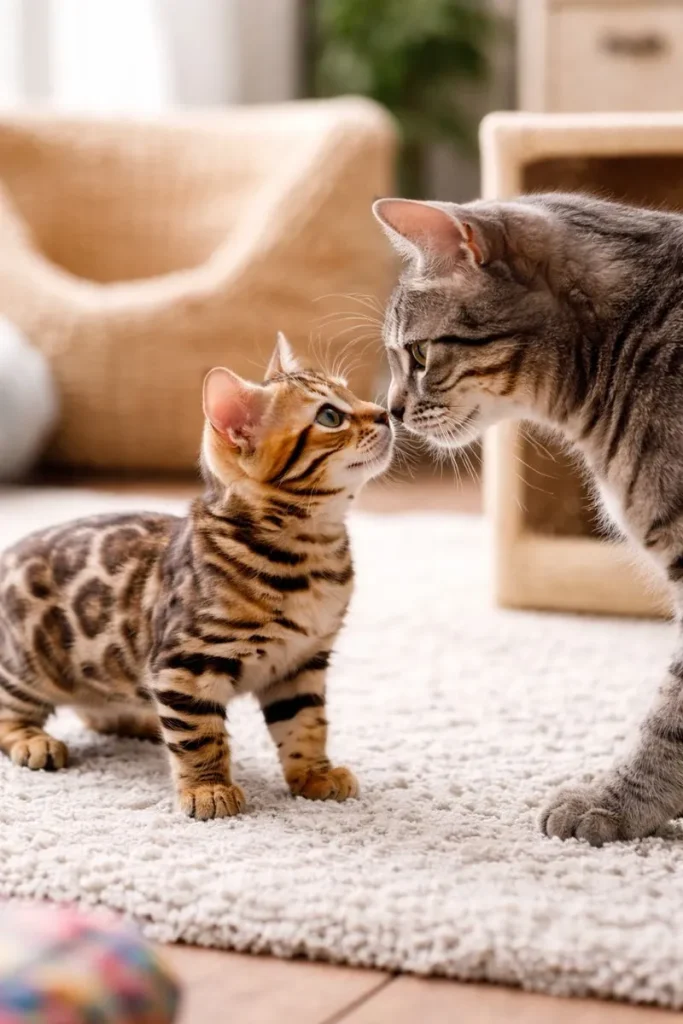
With Other Cats
Introduce slowly using scent swapping. Keep initial meetings short and supervised.
With Dogs
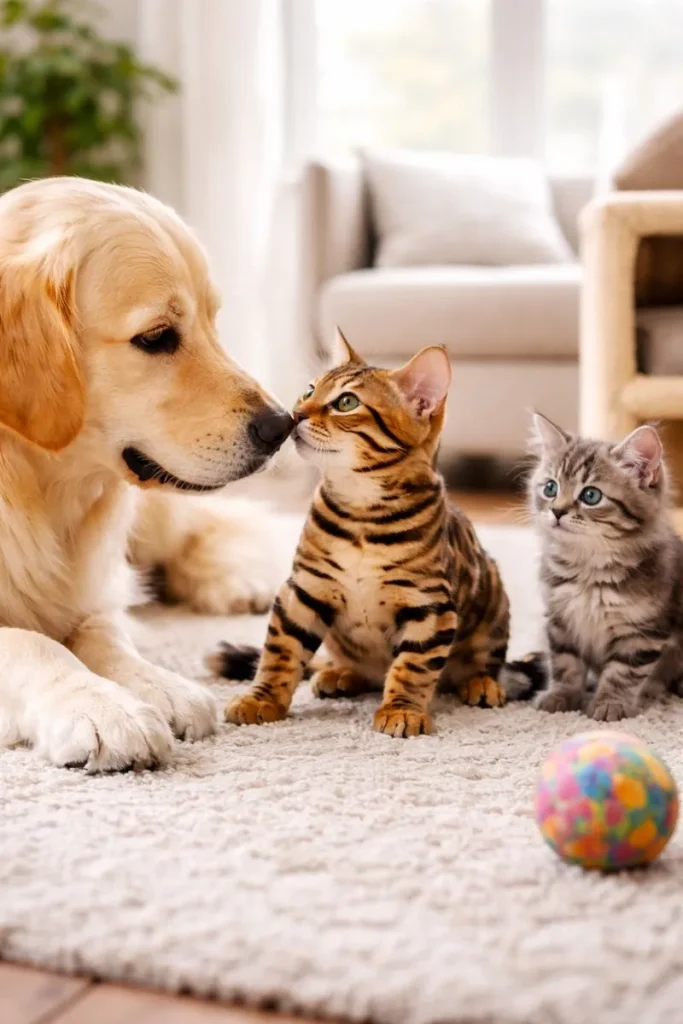
Choose calm, cat friendly dogs. Always use controlled introductions and safe escape routes.
With Small Pets
Due to their hunting instincts, Bengals should be carefully supervised around birds, rodents, or reptiles.
Proper pet introductions reduce stress and support long term Bengal cat socialization success.
Common Socialization Problems in Bengal Cats
Poor socialization can lead to several behavior issues, including:
- Aggression toward people or pets
- Excessive vocalization
- Fear of strangers
- Destructive scratching or climbing
- Anxiety when left alone
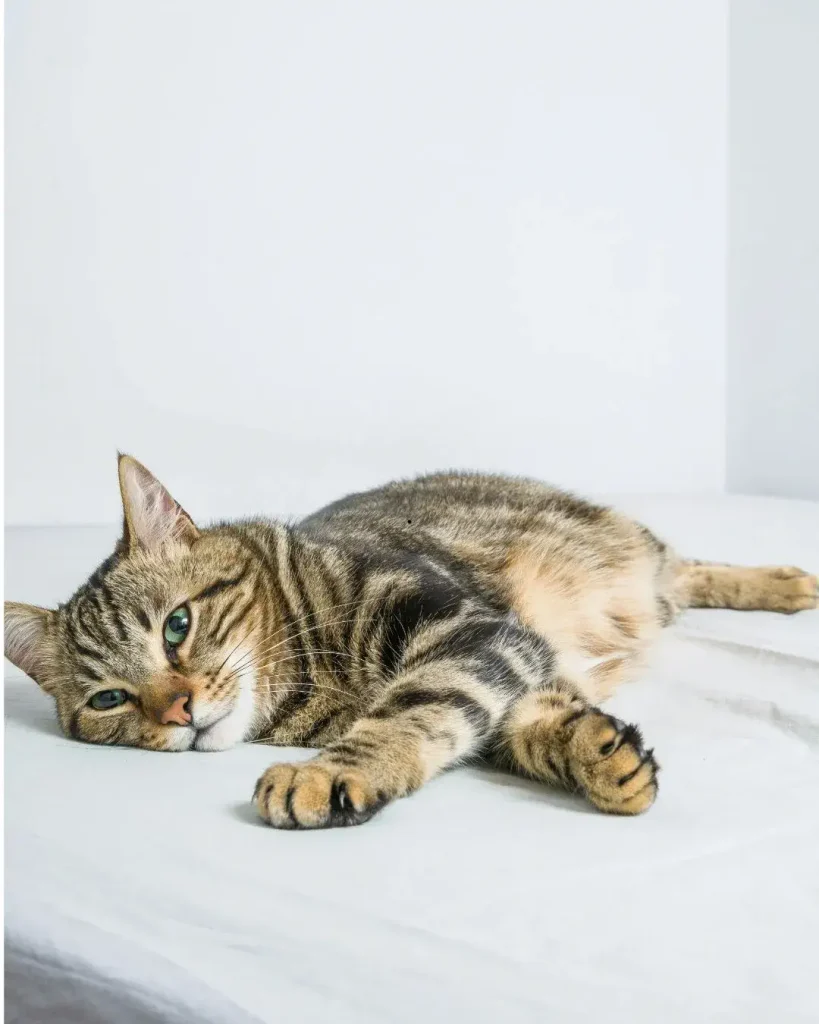
Most of these problems improve dramatically with structured socialization, enrichment, and routine.
Tips to Improve Bengal Cat Socialization at Home
Here are proven, USA household friendly strategies
Mental Stimulation
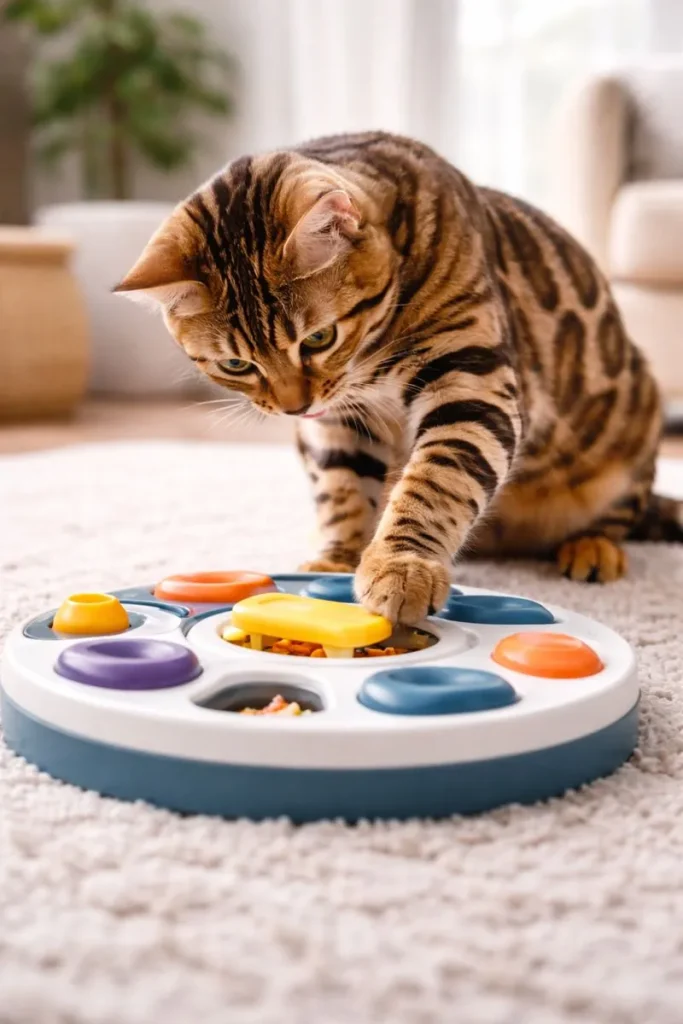
Puzzle feeders and treat dispensing toys prevent boredom.
Vertical Space
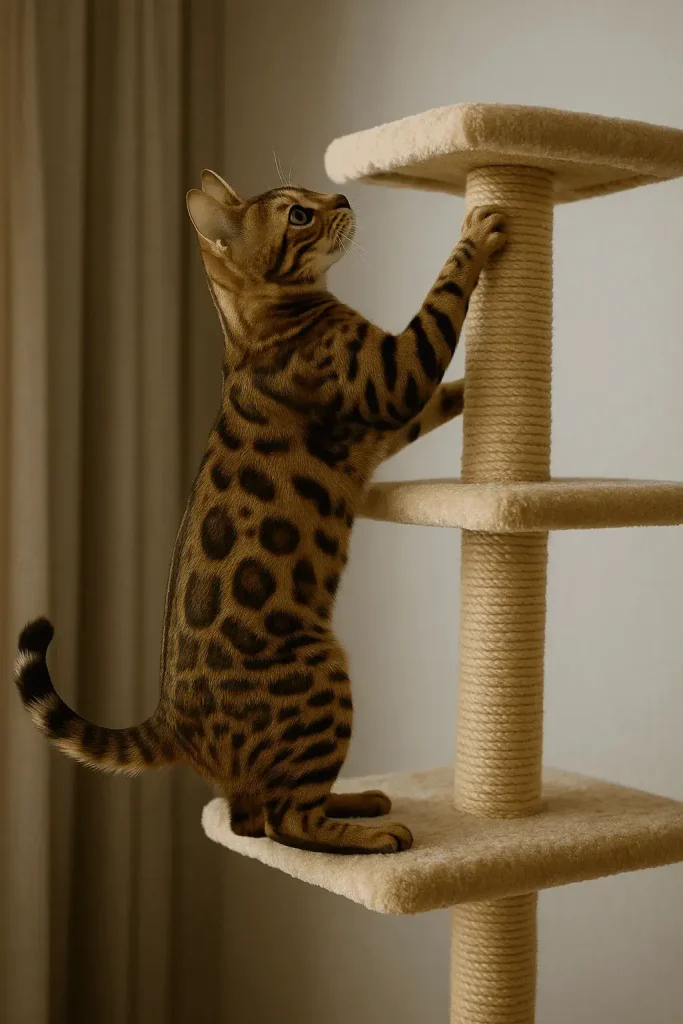
Cat trees and shelves allow safe climbing and observation.
Clicker Training
Bengals excel at learning commands like “sit” or “high five.”
Calm Environment
Avoid loud yelling or chaotic interactions, especially early on.
Daily Play Sessions
Two 15-minute sessions per day can significantly improve behavior.
Mistakes to Avoid When Socializing a Bengal Cat
Avoid these common errors:
- Forcing physical contact
- Skipping playtime
- Inconsistent routines
- Punishing fear based behavior
- Ignoring early warning signs
Bengals respond best to patience, structure, and positive reinforcement.
Indoor vs Outdoor Socialization for Bengal Cats
In the USA, most veterinarians recommend indoor only Bengals for safety. However, you can still provide outdoor exposure safely.
Options include:
Harness and leash training, along with screened patios, offer Bengal cats safe ways to explore the outdoors while staying protected.
Walking on a leash allows your Bengal to experience new sights and smells under your supervision, while screened patios (catios) provide fresh air and stimulation without exposure to traffic or predators.
These controlled outdoor experiences help build confidence, reduce boredom, and support healthy socialization without putting your cat at risk.
How Long Does Bengal Cat Socialization Take
Every cat is different. Some Bengals adjust in weeks, others in months. Factors include:
A Bengal cat’s socialization success depends on several key factors. Age plays an important role, as kittens usually adapt faster than adults.
Past experiences, whether positive or negative, can influence how quickly a cat builds trust.
The environment also matters a calm, enriched home helps reduce stress and encourages confidence.
Finally, owner consistency is crucial, as regular routines and steady interaction help reinforce positive behavior over time.
The key is daily effort. Even small improvements matter.
Benefits of Proper Bengal Cat Socialization
When done right, Bengal cat socialization results in:
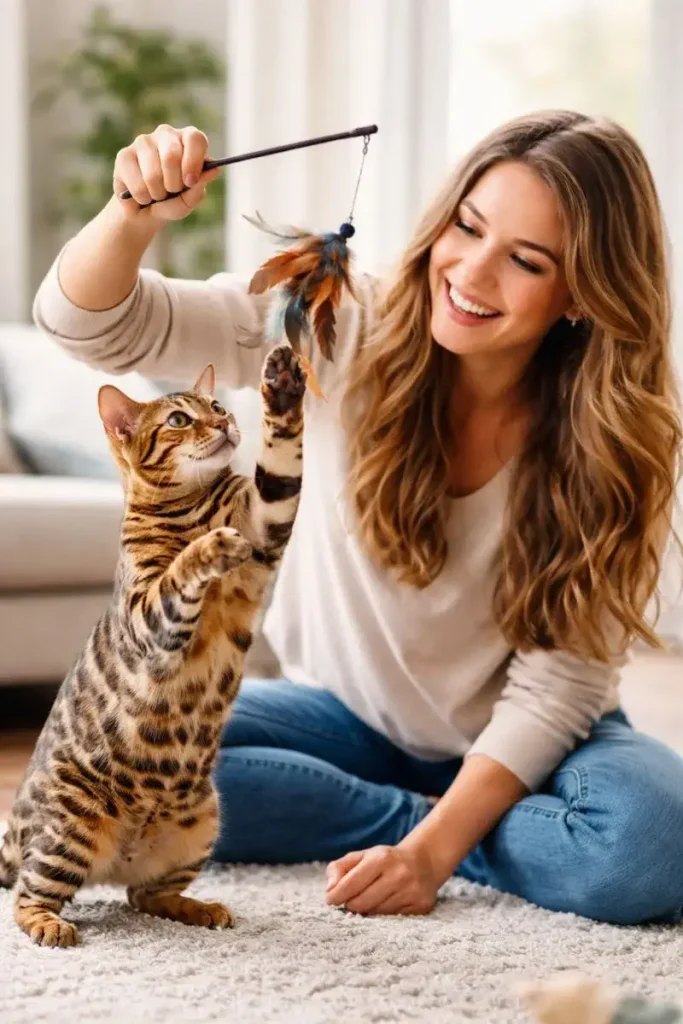
Proper socialization brings many lasting benefits for both Bengal cats and their owners. It helps reduce stress and anxiety, allowing the cat to feel safe and secure. Socialized Bengals grow into confident, friendly pets that enjoy interaction and adapt well to new situations. They also develop strong human bonds, leading to trust and affection. Over time, this results in better health and behavior and creates a happier home overall.
Well socialized Bengals are a joy to live with and form deep connections with their owners.
Conclusion
Bengal cat socialization is the foundation of raising a happy, well adjusted Bengal. These intelligent and energetic cats thrive on interaction, routine, and positive experiences.
Whether you’re starting with a kitten or working with an adult Bengal, patience and consistency make all the difference.
By investing time in proper socialization, you’ll be rewarded with a confident, affectionate companion that fits beautifully into your American lifestyle.
Read More about Bengal Cat
Trusted Sources Cat Behavior & Socialization